Tuesday, September 13, 2011

Crispy Pata Ni JOZA

Crispy Pata. One of those recipes shunned behind every celebrations, But you can't let this one pass. JOZA fries something that is heavenly crispy. And I bet you won't stop gorging this one until it's bone go screaming wild over your plate. And yes, Fundador makes good sense with it. And the sauce? No need to call on the service of Mang Tomas. JOZA's stinging sweet hot soy sauce is all you need for this.


Sisig Ni JOZA

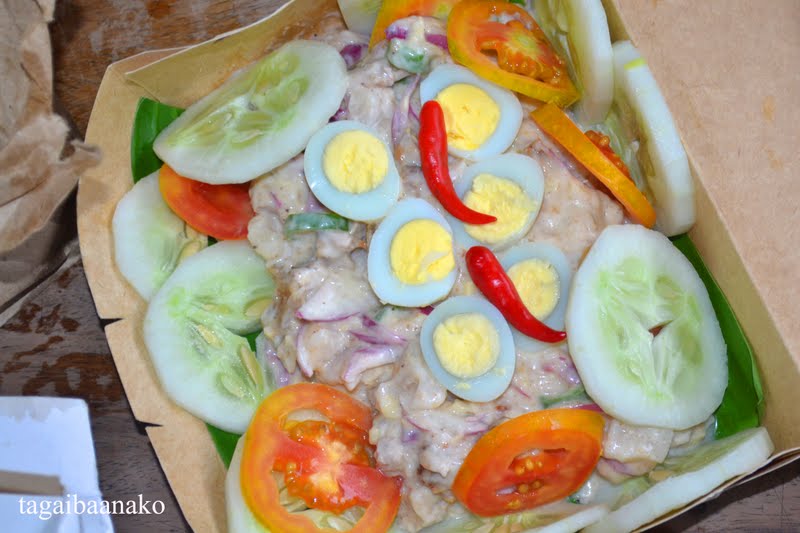
JOZA's Eatery got their own exquisite version of sisig. It makes us of boiled pork meat. The meat are then chopped into dice, mixed with onion, garlic, a pinch of salt, and white mayonnaise. Their version is beautifully crafted with elegant toppings consisting of sliced red tomatoes, cucumber, and quail eggs, not to mention the red hot chilli fingers.


Boiled Native Corn (Nilabong Mais)

Anyone from countryside won't miss this when its season is at bloom.


Monday, April 18, 2011

Korean-Filipino Fused Beef Fried Rice With Kimchi

Korean-Filipino Fused Beef Fried Rice With Kimchi
The invasion of K-pop has gone to the extreme, even invading Filipino kitchens. Traditional fried rice is also being reinvented and twisted for greater taste more satisfying meal experience. Step aside garlic and onions, here comes beef and kimchi ready to dethrone you from your pan empire.

I was invited by a friend one sunny day to have lunch at his place. Arriving late, I was able to catch up with him preparing his own twist and version of fried rice with beef and kimchi. It's still a basic fried rice. But with the infusion of beef and kimchi is something different which I myself could hardly imagine how it would taste.

Kimchi is one of Korea's favorite side dish burning hot with chilli powder. A Filipino version of it makes use of Baguio cabbage which was prepared ahead of time before being used for the fried rice. A fresh Baguio cabbage rinse with lukeworm do the tricks already. Korean chili powder are then poured on them for a blast in one's mouth. They are then cut into threads in order to complement the dried seaweed which also forms part of the said. Dried seaweeds can be bought from super markets.

Beef on the hand we're also pre-cooked before they are used mixed with the fried. And to give more fresh juice and life, green cucumber is also added.

I was dead hungry that day. Much more, I also got excited having the luxury of time to observed how it is being prepared. And as far as the ingredients are concerned, I can say it's a total meal in one. A heavy one. Better than Chowking's chow pan.

So, here's how it goes.

Ingredients
Shredded Kimchi
Pre-cooked beef steak
Bowl of rice
Dried seaweeds.
Sliced green cucumber

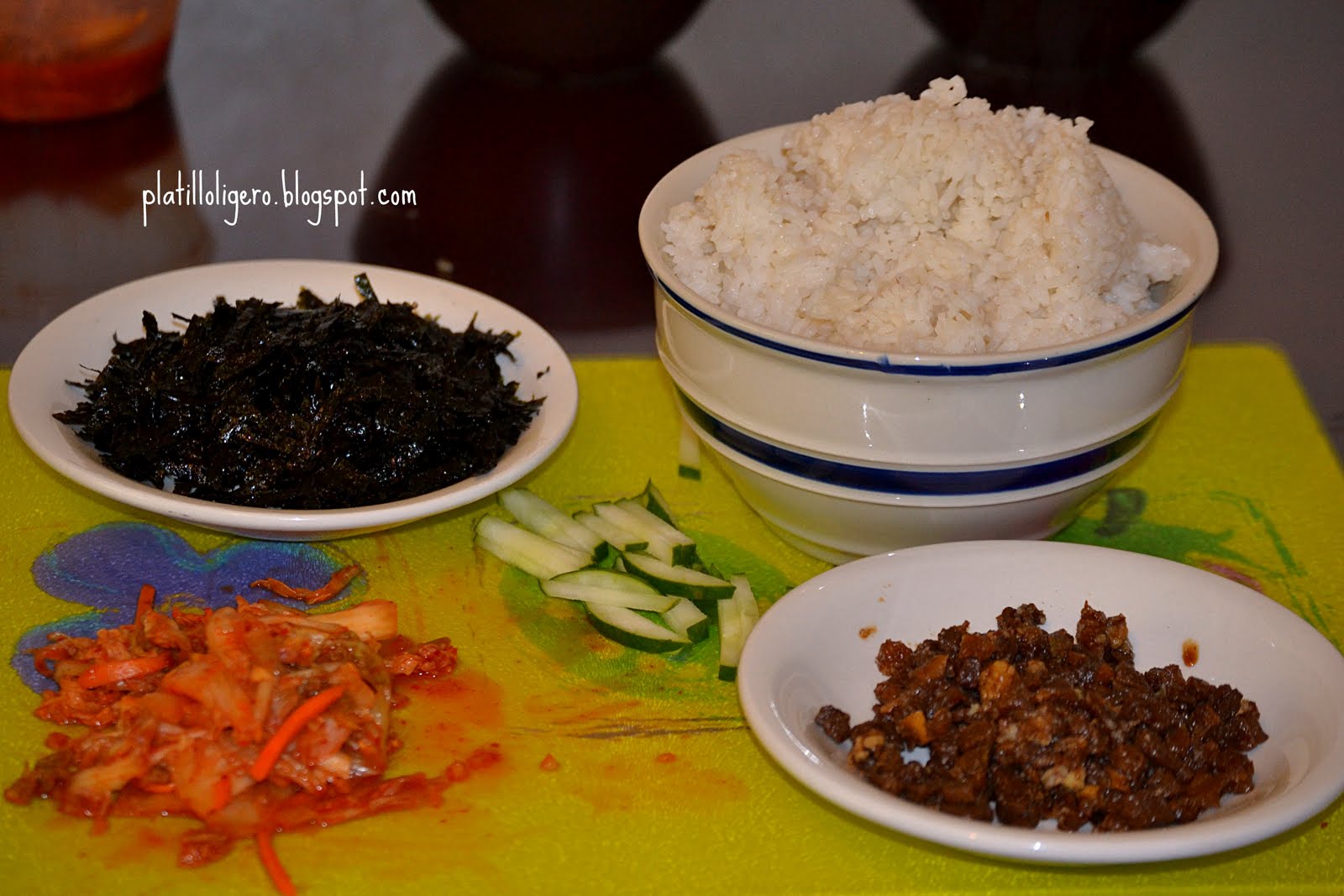
The following are photos showing it's preparation.

Sliced green cucumber.

Shredded Baguio cabbage kimchi.

Dried sea weeds.

Diced and sauceless beef steak.

Bowl of rice.

Complete ingredients for a complete meal.

Step 1. Saute kimchi on hot pan. No oil needed.

Step 2. Add the beef steak.

Step 3. Remove kimchi and beef from pan. Leave a handful of them on pan. Then add rice to fry.

Step 4. Have the fried rice on a bowl.

Step 5. Add sliced green cucumber and the pre-mixed kimchi and beef steak on top. Dried seaweeds are also added.

Step 6. Pour in the remaining kimchi juice to give the fried rice a blast on hotness.

Finally, you now have the Korean-Filipino Fused Beef Fried Rice With Kimchi!

Saturday, March 12, 2011

Onion Rings

Onion rings garnished with green tomato cuts.

Ordinarily, whenever there are occasions, kilos of onions are bought and stocked in the kitchen. And with the traditional foods that we prepare, either tagalog or red onions is preferred. However, since most of the times they cost expensive, we go for the big and white onions.

White onions, specially those from Asian countries are much cheaper. When chopped and diced, there's too many of them already to spice one menu. But then, sometimes, despite tons of white onions we load on pan, they hardly bring the aroma and sting we look for. Useless they are. Their scent hardly stick with the recipe being prepared. Thus, there lacks an appetizing character of the food.

White onions are better
for onion rings.
Instead of getting frustrated with white onion's failure, there's one more recipe that we can do. And maybe you can try some "breaded onion rings".

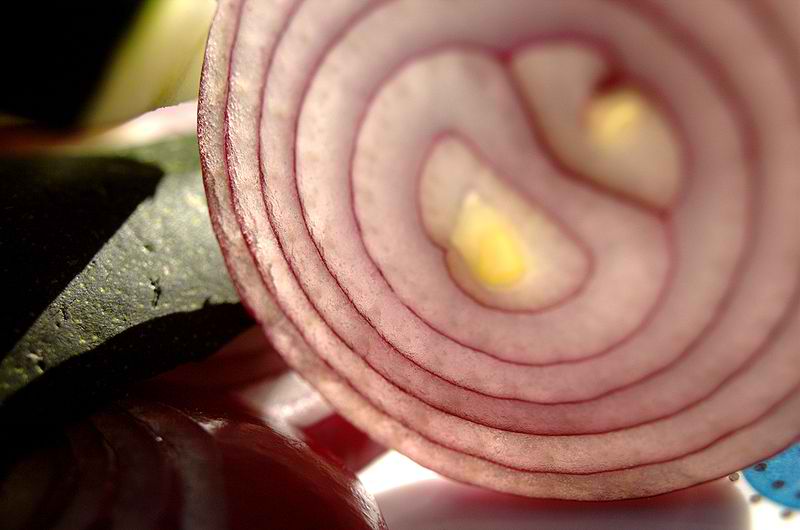
Red and tagalog onions create
so much stir in one's mouth
for onion rings.
Onion rings are just too easy to prepare. You just need to cut them across to the point they form rings from their layers. Dip the rings on a bowl of salted beaten egg. Then have them rolled on bread crumbs. Any ready mix breadings will do. After which, they're ready for frying on a hot pan.

Just let then turn golden brown, and the rest is history. Don't forget the mayonnaise. That's the best part.

Onion rings talk nice with beers.

Onion rings on banana leaves; allowing them to blend with traditions.. 

Tuesday, March 8, 2011

Cheese Sticks

Before, lumpiang shanghai tops among the munchers' choice for finger foods in different celebrations. However, due to complexity of its preparation and the expensiveness of its ingredients, it has evolved into much simpler recipe in the form of cheese sticks.

Lumpiang shanghai, as what we've gotten used with, include grind pork meat, mixed with seasonings like salt, minced black pepper, diced carrots, onions, garlic and others. Of course, they'll have to be wrapped. Carelessness would break the wrapper during the process and even during it's frying stage. In the case of cheese stick, just a slice of it, you already have a complete set and in no time ready to dressed with a quarter cut of the wrapper. To put more bite on the stick, a slice of red bell pepper is often included per stick. It doesn't matter if the wrapper goes off the line when frying. Nothing will spill out of it compared to lumpiang shanghai.

A five to ten-minute dive on hot pan, depending on the degree of fire, is all you need to wait until they turn into bit golden brown. Set aside on strainer until they dry down from excess oil before serving. Napkins may also do the trick.

Cheese sticks are best with a mixed mayonnaise and ketchup dip. And goes along well with bottles of beer. 

(Note: We had these during my parents' anniversary last February 7.)


Friday, March 4, 2011

Grilled Tilapia

Grilled Tilapia with kimchi on plate.
Grilled tilapia or inihaw/binanging tilapia usually takes center table for most of men's "conferences". This has been another "everyone's favorite" since time immemorial. Aside from the fact that it's easier to prepare, it also takes shorter time on grill before it reaches the plate. And again, a sizzling dip will provide the boost on its meat juice.

When grilling tilapia, scales were scaled off the skin. They are left intact so as to protect the meat from being directly torched by coal fire. Thus, bitter taste is avoided. You can allow the scale to burn outside, yet meat juice are kept inside. You even see it flow down your fingers when you take a bite of them.

Of course, tilapia need to be cleaned thoroughly. Internal organs and gills must be removed. This, again, will spare your grilled tilapia from the wrath of bitterness. We're talking about grilled tilapia. So when placed on grills, constant air is needed to keep the coal on fire, and to keep smoke from swallowing them. Smoke kills the natural scent of tilapia. The same thing goes with other grilled foods. And for intrinsic taste, salt or ready-mix seasoning can be rubbed around it.

A sizzling dip provides boost on its meat juice.
A medium sized tilapia can be bought at P50.00 - P80.00 per kilo. Large ones are usually pegged at P120.00 and above. And if you want numbers, then you can try the small ones, of course at lower price.

Moniker And Character

Tilapia (pronounced /tɨˈlɑːpiə/ ti-LAH-pee-ə) is the common name for nearly a hundred speciesof cichlid fish from the tilapiine cichlid tribe. Tilapia inhabit a variety of fresh water habitats including shallow streams, ponds, rivers and lakes. Historically they have been of major importance in artisan fishing in Africa and the Levant and are of increasing importance inaquaculture (see tilapia in aquaculture). Tilapia can become problematic invasive species in new warm-water habitats, whether deliberately or accidentally introduced but generally not in temperate climates due to their inability to survive in cool waters, generally below 60 °F (16 °C).

The common name tilapia is based on the name of the cichlid genus Tilapia, which is itself a latinization of thiape, the Tswana word for "fish". Scottish zoologist Andrew Smith named the genus in 1840.

Tilapia go by many names. The moniker "St. Peter's fish" comes from the story in the Christian Bible about the apostle Peter catching a fish that carried a coin in its mouth, though the passage does not name the fish.[3] While the name also applies to Zeus faber, a marine fish not found in the area, a few tilapia species (Sarotherodon galilaeus galilaeus and others) are found in the Sea of Galilee, where the author of the Gospel of Matthew accounts the event took place. These species have been the target of small-scale artisanal fisheries in the area for thousands of years. In some Asiancountries including the Philippines, large tilapia go bypla-pla while the smaller types are just tilapia.